Anatomy of a blow-up
It happens: you blew up in the back half of a race. Fuel, pacing, or heat? Your splits and heart rate usually tell you which.
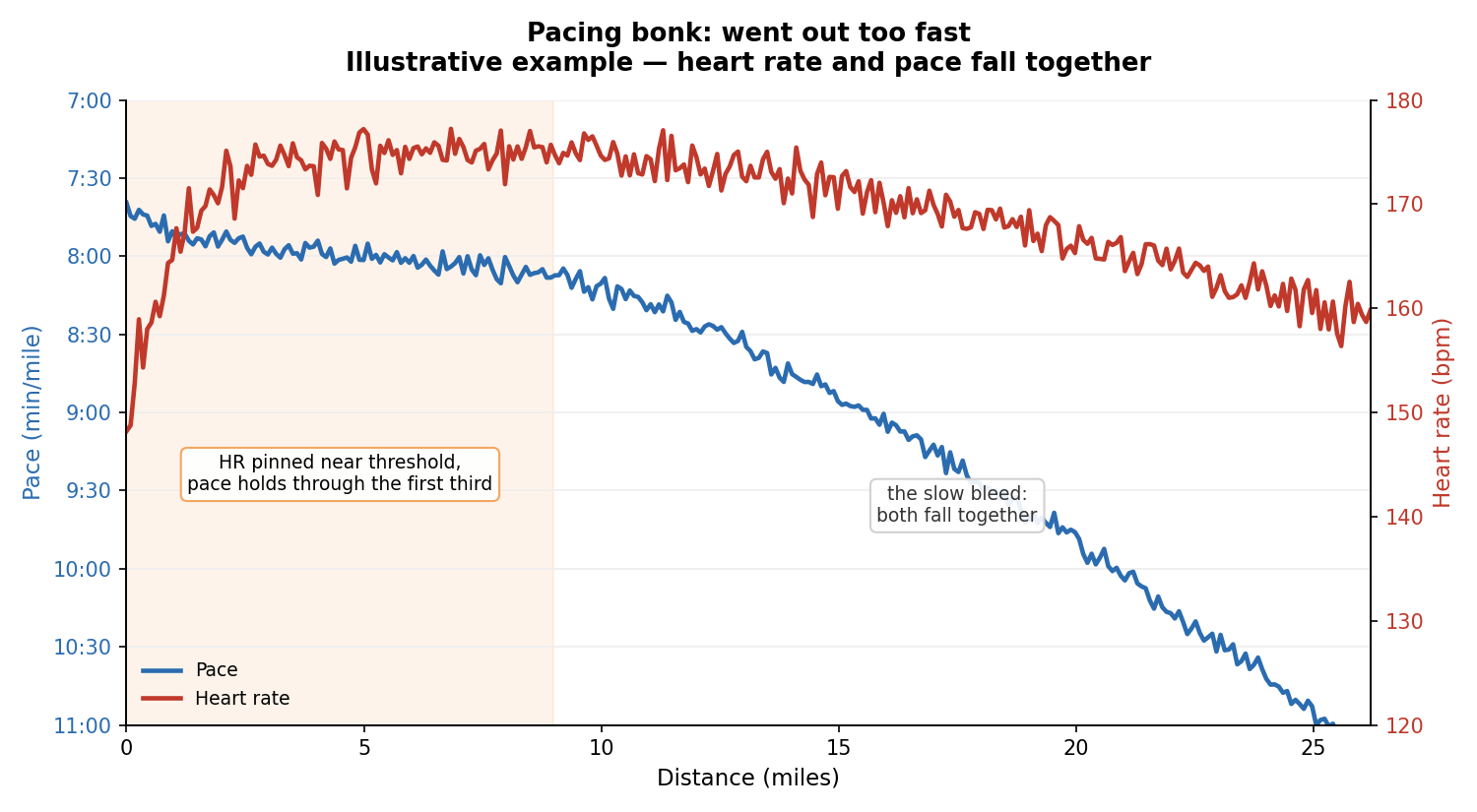
A pacing bonk: heart rate and pace fall together. You started too hard, heart rate pins near threshold early, and once you've held that for a while (often mile 8 to 10), pace and heart rate decline together to the finish. Fix: pace to your fitness, not your ambition.
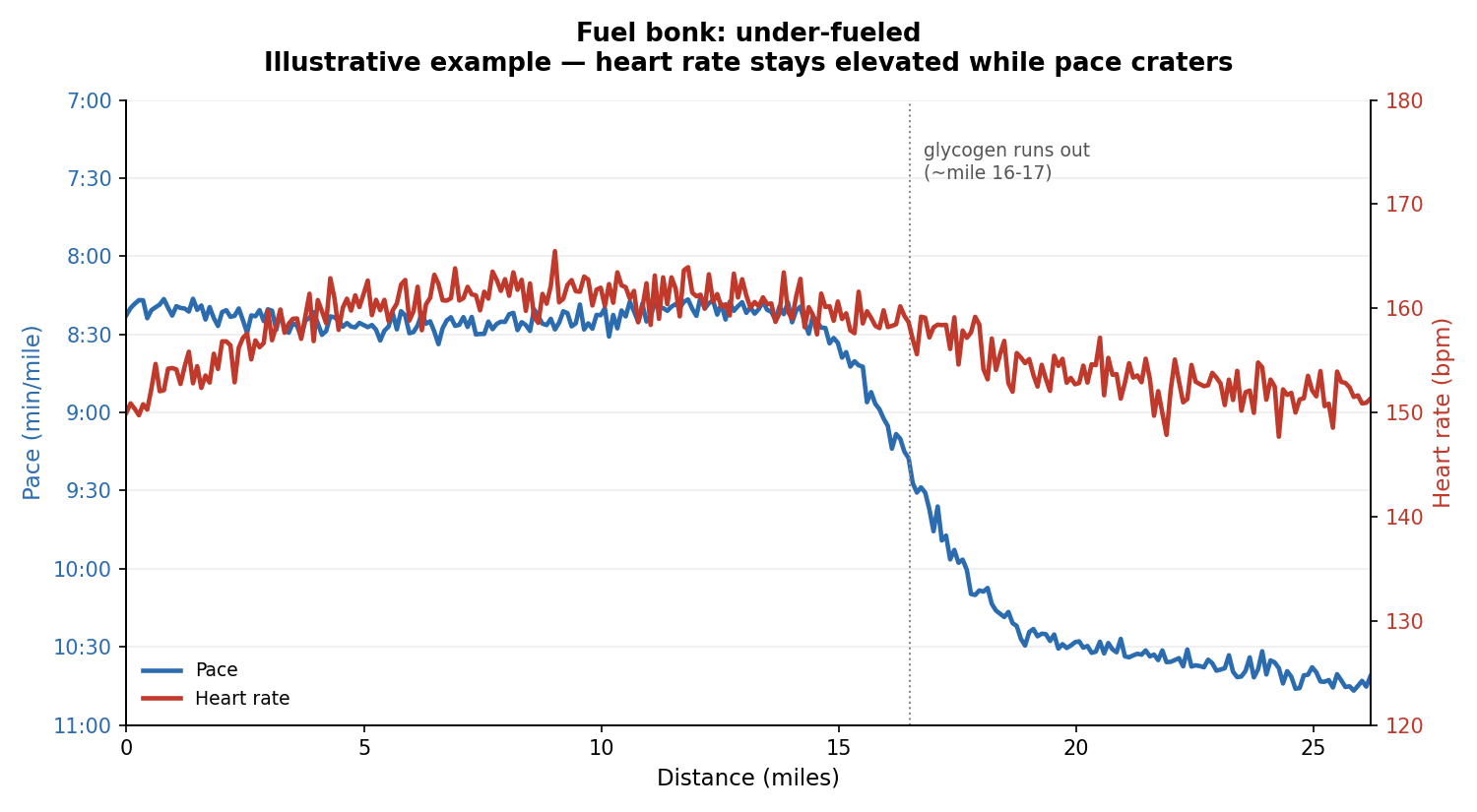
A fuel bonk: heart rate stays elevated while your pace craters. Your legs stop responding even though your engine is still trying, that's glycogen running out, not effort. Usually shows up mile 16 to 20 if you were under 60 to 90g of carbs an hour. Fix: practice fueling on your long runs, not just race day.
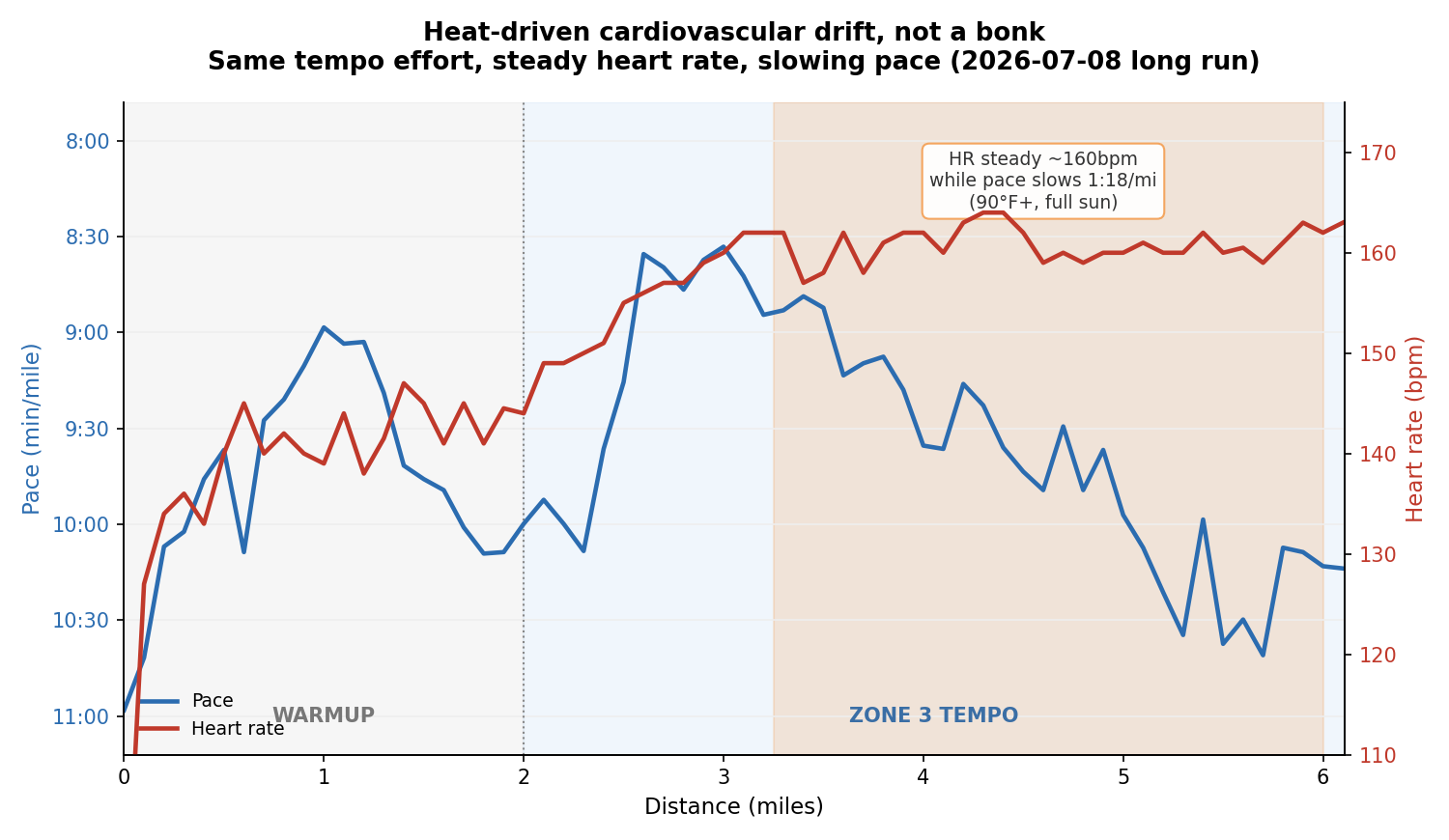
Heat drift: heart rate holds steady while pace keeps slowing, no dramatic crater. More blood gets routed to your skin to cool you down, so your heart works harder to hold the same output (González-Alonso et al., 1997, Journal of Applied Physiology). Marathon pace slows progressively as temperature rises, for every runner (Ely et al., 2007, Medicine & Science in Sports & Exercise). From my own long run this week (90°F+): heart rate held near 160bpm for almost half an hour while pace slipped from 8:50 to over 10:10 per mile. Same effort, slower pace. Fix: run by heart rate or effort on hot days, not a fixed pace, and expect a slower time, not a worse run.
Know which one you're looking at, and you know what to actually fix.
This started as a post over on r/runsense, our little corner of Reddit. Come hang out, or read the full version: Anatomy of a Blowup.
— Raph
One running guide a week.
Calm, useful, no spam. Plain-English coaching from the Runsense team, once a week.